Úlfhamssaga
- Year
- 2004
- Type
- Play
- Role
- Director and writer
- Venue
- Annað Svið / Hafnarfjarðarleikhúsið
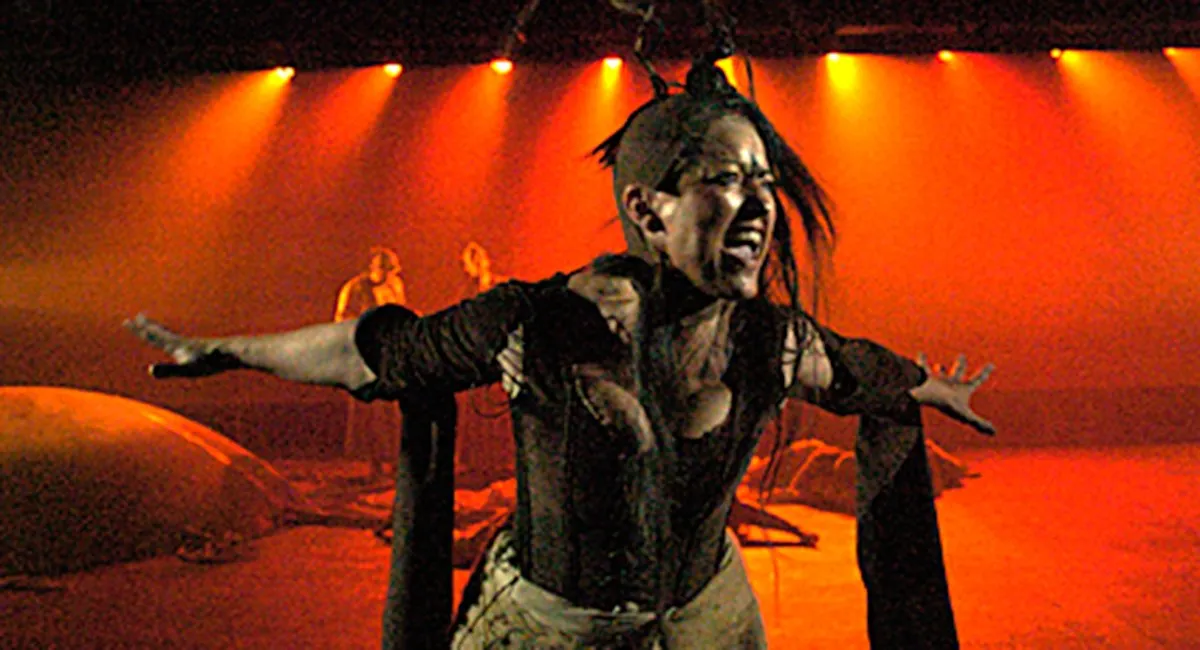
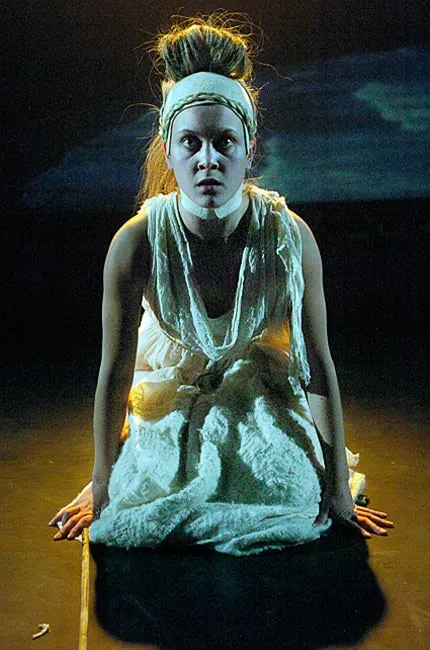
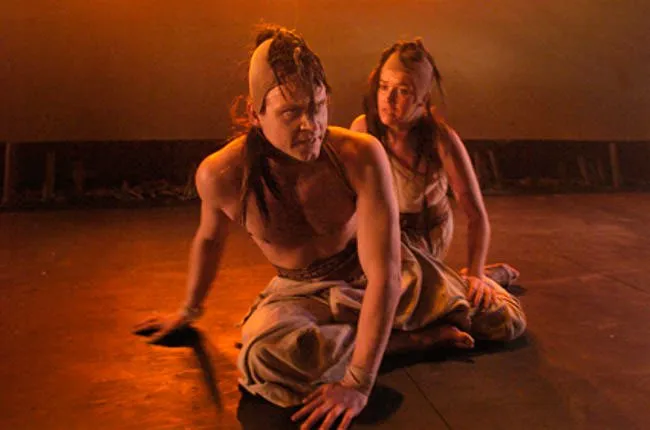
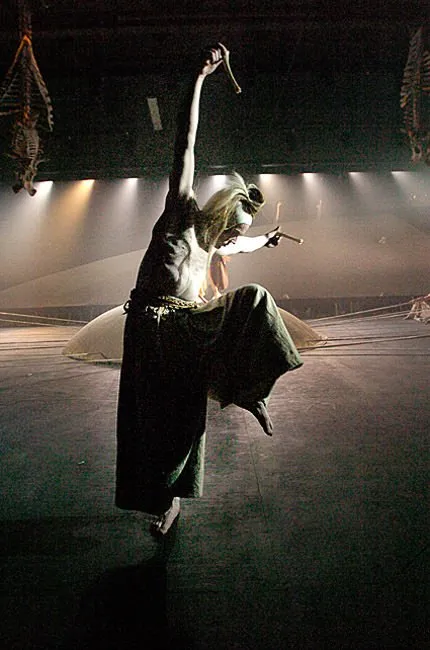
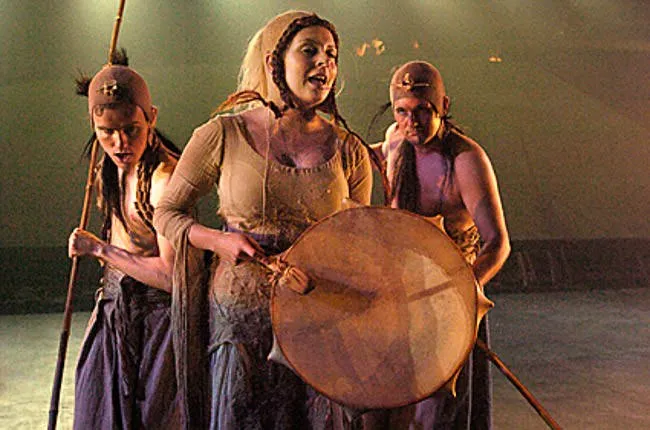
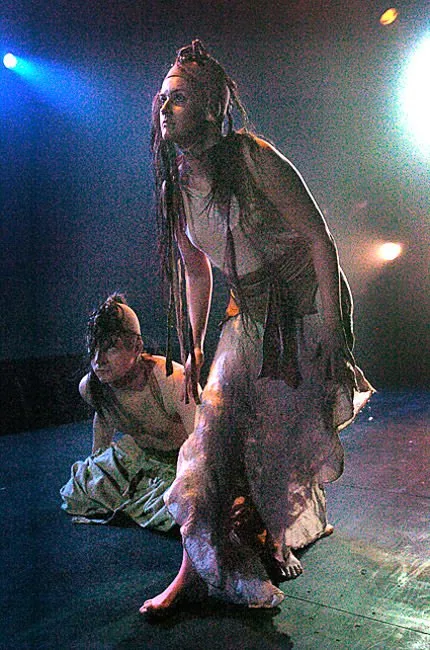
Úlfhamssaga (The Saga of Úlfhamur) is a thrilling tale of ruthless power struggles and bloody conflict between generations – and of love in its most beautiful form.
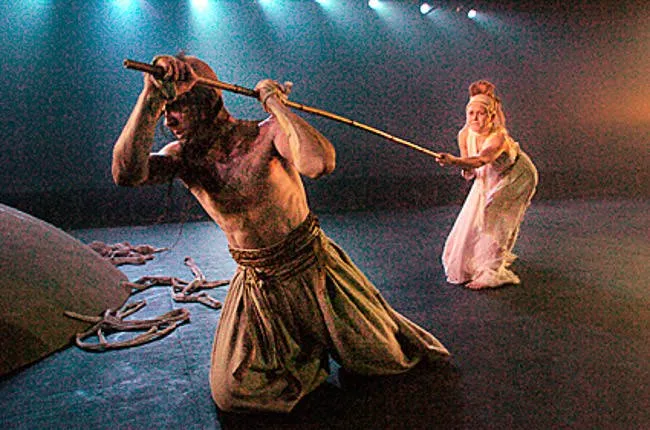
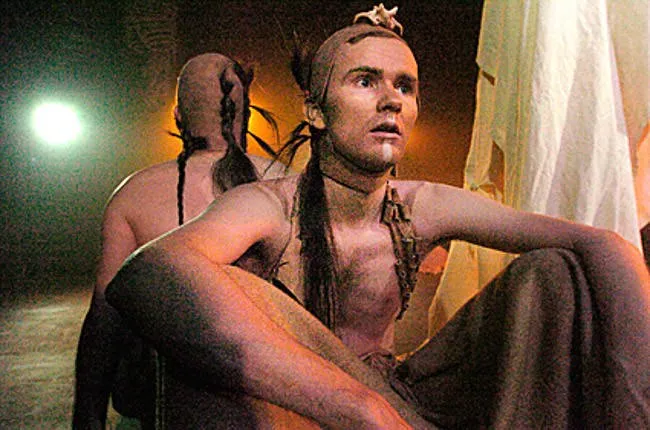
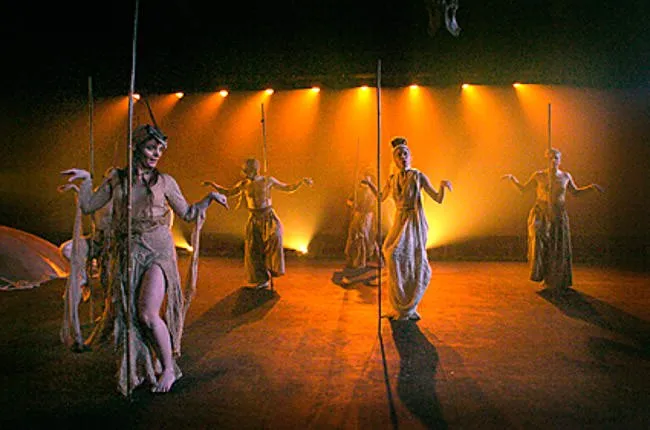
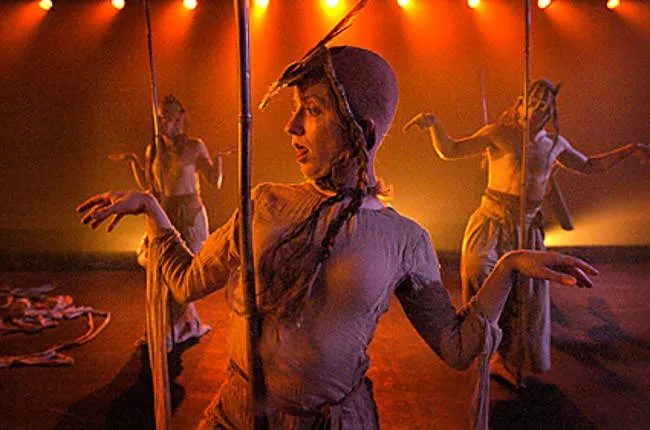
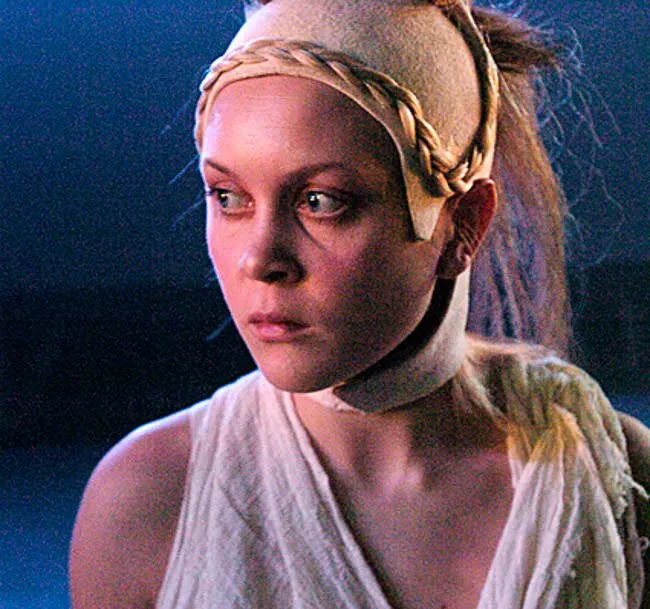
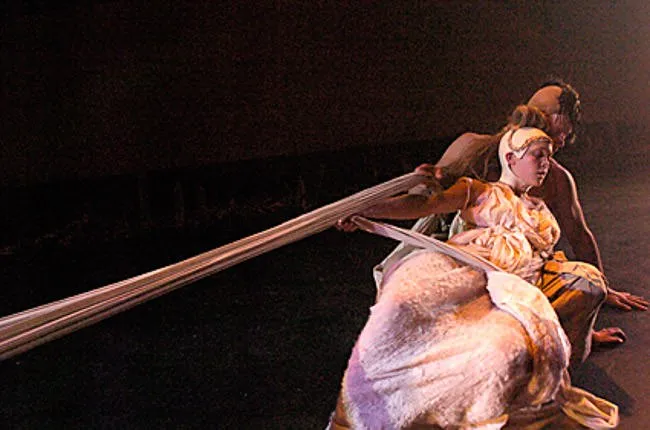
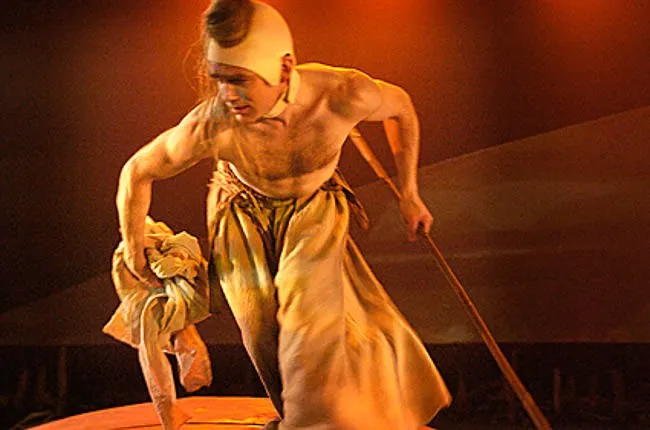
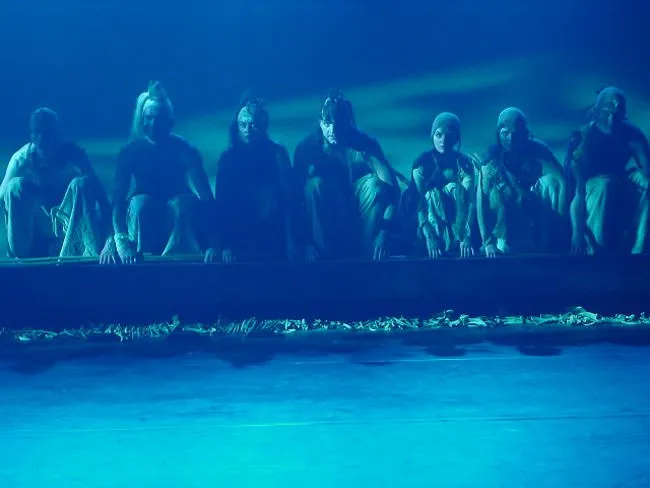
With Úlfhamssaga, María Ellingsen stepped forward as director and writer, leading a group of artists in creating a production from medieval Icelandic rímur (epic ballads), in which song, dance and drama form a single whole. The production was enthusiastically received, ran to full houses at the Hafnarfjörður Theatre and received seven nominations for the Gríma, the Icelandic theatre awards, winning two. It then travelled to the Faroe Islands, where the company was invited to perform at the Nordic House in Tórshavn.
More about Úlfhamssaga
The saga of Úlfhamur had long been forgotten and inaccessible; the saga itself was lost, but its core survived in rímur from the 14th century. In her doctoral thesis, Aðalheiður Guðmundsdóttir dusted off this extraordinary and unusual legendary saga and made it accessible.
Úlfhamssaga is adventurous and exciting, with unusually deep threads. It examines human nature and human insight, and in that sense recalls Grimm’s fairy tales and the Greek tragedies. It was therefore a unique opportunity for Icelandic theatre artists to get their hands on such material.
“Úlfhamur undresses before he enters the burial mound; he leaves the world of human contact and walks naked into the power of the ghost. He cannot return from there of his own accord …”
The production
We set out to amplify this ancient spell, bring Úlfhamssaga to the stage and share this treasure with the audience – to let the rímur ring out with a primal Nordic tone as the story comes alive in strong images, dance and drama. The result was a stylised production born of a sung epic, an unusual and exciting starting point for theatre.
Set designer Snorri Freyr Hilmarsson, choreographer Reijo Kela, musician Eivør Pálsdóttir and María Ellingsen laid the foundations of the piece and of how music, visual art, song, dance and drama could merge in the production. María and Gréta María Bergsdóttir then worked on its structure, and Andri Snær Magnason wrote the text.
The story
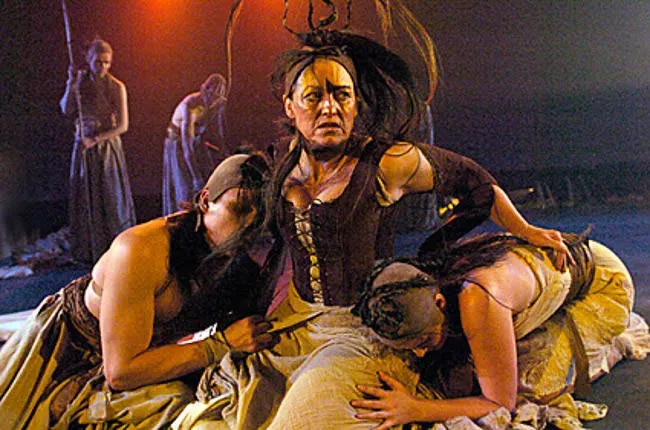
Hálfdan, king of the Gauts, is cursed to be a wolf in winter, roaming the wild forests, but at the start of each summer he returns home to his family and rules his kingdom. His queen, Hildur, is unhappy with her husband’s condition, and one day, when the king returns from exile, she drugs him and kills him. The next morning she offers their son Úlfhamur the throne – on condition that he also accepts her hand. He refuses and flees to the forest with his foster brothers Skjöldur, Hermann and Ásmundur, where he builds a fortress.
Hildur makes another attempt to win Úlfhamur over, and their forces clash in battle. After a valiant fight, Úlfhamur and his men fell four oak trees on Hildur, but she uses her sorcery to escape.
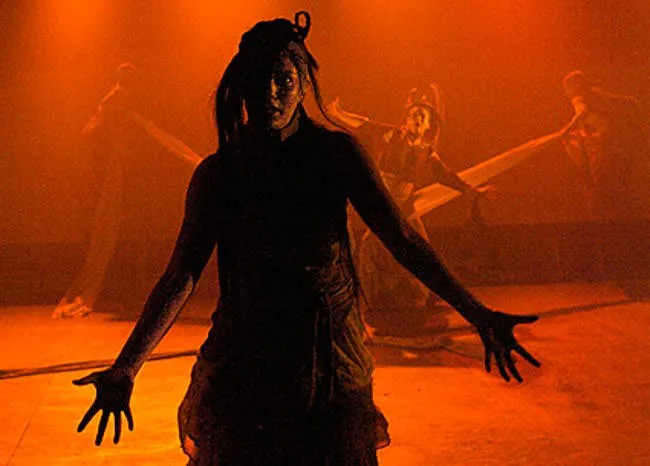
Before long Hildur tries again and invites him and his followers to a feast. Úlfhamur accepts and attends with his foster brothers and his sister Dagbjört. During the meal Queen Hildur entertains the guests with tales of a shieldmaiden named Vörn, who had raided King Hálfdan. After her defeat she had cursed the king and his men to become wolves in winter. Vörn was then killed and buried, and her mound named Varnarhaugur. When she has finished, Hildur is seized by a frenzied rage and casts various spells on those present. Úlfhamur she sends into Vörn’s mound, where he must stay trapped for life unless a woman adorned in gold comes to rescue him and takes his place in the mound – whom he will then forget. Ásmundur she dooms to a short life, while the brothers Skjöldur and Hermann she sends to Valland, where they will long for birds instead of women. At this point Dagbjört, her daughter, has had enough. Using knowledge her mother had once taught her, she casts a spell on Hildur that leads to her death.
The four foster brothers now set out. Úlfhamur casts off his clothes and disappears into the mound. Skjöldur, Hermann and Ásmundur take a ship but are caught in a storm and separated: Ásmundur is washed up on an island, while the brothers reach Valland and become lovesick for cranes they try in vain to catch. Ásmundur comes to a farm and meets a woman named Ótta, who knows the fate of the foster brothers. She is determined to rescue Úlfhamur, even though she knows he will forget her; she boards a boat and does not stop until she reaches the mound, where she too casts off her clothes and goes inside. Ásmundur meets his fate and falls to a mysterious knight on Ótta’s island.
Úlfhamur is now free but cannot remember how he got out of the mound. He searches for his foster brothers and finds Skjöldur and Hermann in Valland fighting berserkers. Úlfhamur comes to their aid, and after a glorious victory the cranes fly in. At this the brothers become restless and are desperate to catch them. The cranes fly away, but Úlfhamur and his new companion Atram – who is in fact Ótta’s brother – follow them and at last find two beautiful young women asleep in an earth house with crane skins beside them. They burn the skins and take the women, Álfsól and Sólbjört, back to their ships.
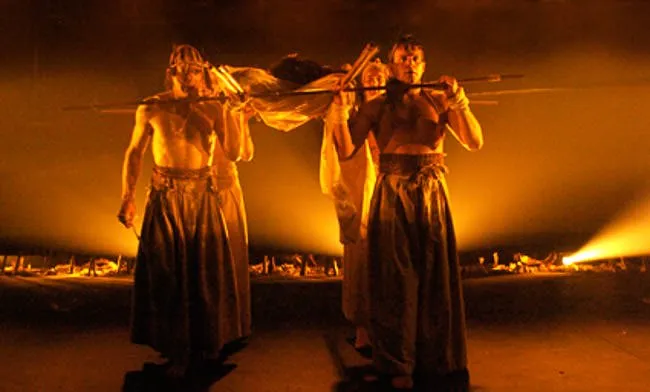
The young people then set off for home. Sólbjört restores Úlfhamur’s memory, and he resolves to rescue Ótta from the mound. He sends for his sister Dagbjört, who is to meet them at the mound with four slaves. Dagbjört spares no effort and practically leads the rescue. They lure the ghost in the mound away from Ótta by fixing Dagbjört’s slaves to spears as bait. Atram kills the ghost and Úlfhamur carries out Ótta, who is closer to death than life. Finally they sail on to Gautland, where a fourfold wedding is held.
What it is about
Úlfhamssaga is about a fractured world that becomes whole, about power struggles and conflict between generations. It reflects the need and the effort to tame the cruel, self-centred and destructive forces of human nature, and ends with the triumph of good over evil. It is also about love in its most beautiful form, for the lovers are symbols of opposites that become whole when united.
This could hardly be more relevant today, when intolerance of other cultures is one of the main sources of division and war. In Úlfhamssaga we see that in the new generation that takes over, everyone is accepted, and problems are solved not through war but by joining forces, using different qualities in a positive way and working side by side.
Like The Lord of the Rings and Romeo and Juliet, Úlfhamssaga holds deep wisdom that can be meaningful while also entertaining audiences, as it has for centuries.
Theatre of body and soul: opening-night speech
“Annað Svið is a theatre I keep in my heart, and it only comes alive when something moves it. So it was with the forbidden love between siblings in Sam Shepard’s Fool for Love, the love that made the nurse Dóra fly away in Egloff’s The Swan, the strange maternal love in Beckett’s Rockaby, Salka Valka’s unconditional love for Arnaldur – and so it is with love in its many forms in Úlfhamssaga.”
I wrote this in the programme for Úlfhamssaga after wondering what drives my work with an independent theatre. I realised that it was not a question of new or old, but of a play or material touching me so deeply that I had, as the band Stuðmenn put it, “energy and faith” to spend the next two or three years raising the money and wrestling it onto the stage.
But the working method used to approach the material also matters. Of the methods I encountered at the Experimental Theatre Wing at New York University, I was most taken with starting from body and voice, moving from there into the reality and atmosphere of the piece, then exploring who the character is, how she relates to the other characters and what she is doing in each scene. The words come last – and then there is something behind them, and they are easy to learn. This method can be used whether the play is written in advance or born in the rehearsal room.
It is not a new method but one that grew out of the experiments of the 1960s, on which the school I chose was built. The influence of Merce Cunningham’s experiments in the dance world was also felt, and hardly any experimental theatre company passed through New York at that time without its leaders being invited to teach workshops at our school.
The problem with these experimental methods was mainly that they were very powerful in themselves – not least for the participant, who often entered another state in improvisation – but as soon as the material had to be repeated and shaped into performable form, it died.
You may know rehearsal processes that begin with improvisation and fun, after which the script comes out, a conventional production process begins, the first has little to do with the second, and the improvisation contributes little or nothing to the final result. Or the opposite: improvising and improvising, and then inviting the audience to watch the actors’ private self-indulgence, which it barely connects with.
But when you manage to build a bridge between improvisation and script, a kind of magic happens – theatre of body and soul – and the work reaches the audience on many levels.
In staging Úlfhamssaga I was guided by this: powerful material that moved me deeply, and this working method. As everything else was a blank page, I decided to make it an expedition of discovery in creating the piece. For the first stage of the expedition I chose the singer Eivør Pálsdóttir, the set designer Snorri Freyr Hilmarsson and the experimental dancer Reijo Kela. I wanted to see what would happen if we met with this material, let it affect us, saw what ideas it sparked in each of us through our own art form, and put them all into one pot. We did this several times over a long period, got to know each other and began to tune in to one another. In between, Úlfhamssaga simmered in all our subconscious minds, and I began working with the dramaturg Gréta María Bergsdóttir on the dramatic structure of the piece.
In the next stage of the expedition, last spring, a company of ten actors joined us along with the writer Andri Snær Magnason, and for two weeks we worked from body and voice, which then led into improvisation based on Úlfhamssaga. That is where the narrative style, movement patterns and atmosphere we use in the production were born.
That is also where we made an agreement with the actors that this was a work that would not exist without them; it would spring from them and be shaped by them. I believe the key to a powerful, living production is to harness the actor’s creativity, light the fuse and let them flourish.
In the autumn more artistic collaborators joined the expedition: costume designers Helga Stefánsdóttir and Bergþóra Magnúsdóttir, make-up designer Ásta Hafþórsdóttir and lighting designer Björn Bergsteinn Guðmundsson, along with the video artist Gideon Kiers.
The next task was to build the bridge from the fertile improvisation of the spring and bring us closer to making our story, Úlfhamssaga, intelligible. I took the risk of keeping the process open until the last day and letting everyone in the group have a voice; every idea was tried, and from them new ones were born. We made it a rule to talk less and do more.
The actors had varying experience of this way of working; some held back at first and even apologised when they hesitantly offered their first ideas. The script was written in rehearsal, and text was tried out as we went, thrown away, rewritten and so on.
At times there was unease among the members of the expedition, who felt exposed and in danger and could not see where they were going. But as expedition leader I knew from experience that not being sure is part of working this way, and that you have to hold on, keep breathing and put one foot in front of the other. All along I had a strong sense of the direction we were heading, and because we had tuned in to each other in the spring, all the ideas that emerged seemed to point the same way.
This method is risky and time-consuming, as democracy tends to be, and extremely demanding. But its advantage is that every artist on the expedition is active and has the chance to flourish in the process – and the result, in this case Úlfhamssaga, is greater than the sum of all of us.
Awards
- Seven Gríma award nominations and two awards