About the actor
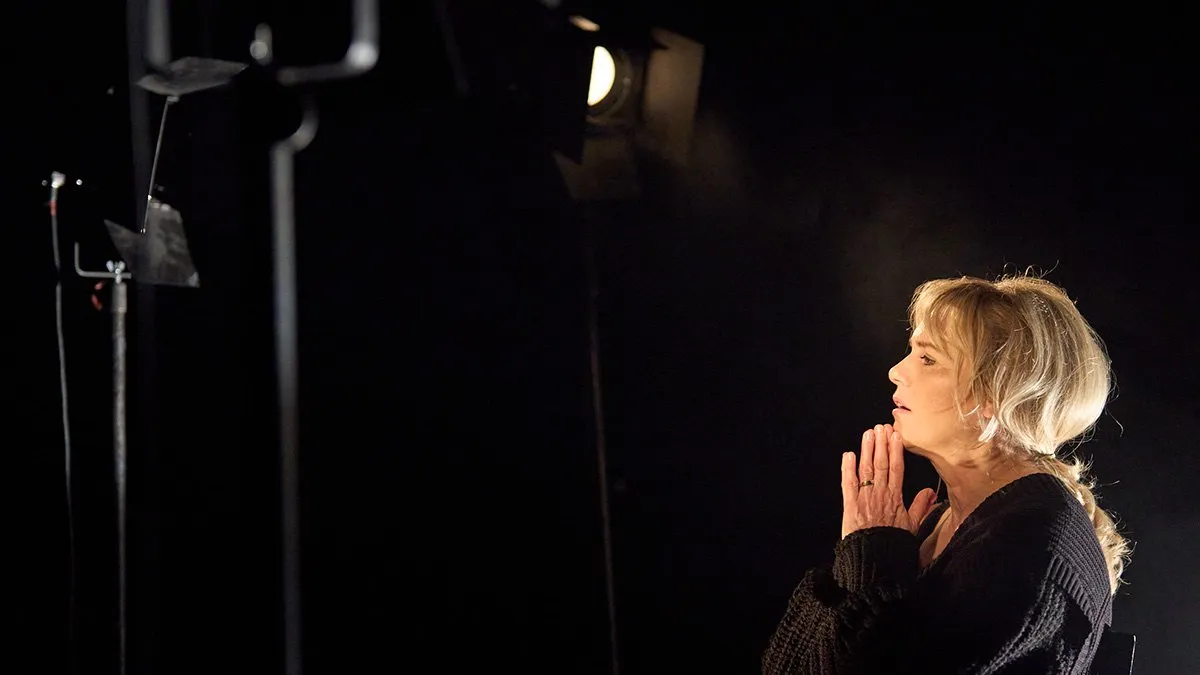
María Ellingsen was born in Reykjavík on 22 January 1964 and is of Icelandic, Faroese and Norwegian descent. She speaks Icelandic, Faroese, Danish and English.
She began acting on stage and in film early, and at twenty went to the United States to study acting. She graduated with a BA from the Experimental Theatre Wing at New York University in 1988. The approach taught at ETW was grounded in physical expression, voice and improvisation in the spirit of Grotowski, who visited the department and led workshops. Students learned to create original work through devised theatre, where the source might be a word, an object or a theme. Dance in the spirit of Merce Cunningham was central, Mary Overlie taught Viewpoints, voice training followed Roy Hart, and avant-garde directors such as Robert Wilson, Richard Foreman and Anne Bogart were among those who directed the student theatre. At the same time María trained in screen acting in collaboration with NYU’s film school, and by graduation had acted in numerous short films as well as two Icelandic feature films.
Back in Iceland, her first stage role was at the National Theatre, where her parts included Cécile in Les Liaisons Dangereuses and Miranda in The Tempest. She returned to New York to gain more theatre experience, but an offer to play the East German Katarina in the television series Santa Barbara gave her the chance to try her luck in Hollywood. There she first filmed 170 episodes of the series, followed by film roles including The New Age for Warner Brothers, D2: The Mighty Ducks for Disney and Deadly Currents for Showtime.
It was the Icelandic film Agnes that brought her home again. She played the title role – the farm servant who killed her unfaithful lover and paid for it with her life on the executioner’s block – and was named best actress at the Verona film festival for the part. Since then she has played many roles on stage, television and film in Iceland and abroad.
Annað Svið is an independent theatre María keeps in her pocket and takes out whenever a good play compels her to act. Its productions have included Sam Shepard’s Fool for Love, Beðið eftir Beckett (Waiting for Beckett), Elisabeth Egloff’s The Swan, in which she played the nurse Dóra who falls in love with a swan, and Salka Valka – A Love Story in collaboration with the Hafnarfjörður Theatre, in which she played Salka. Then came the dance-theatre piece Úlfhamssaga, nominated for seven Gríma awards, with which María made her debut as a director, leading a group of artists in creating the piece from Icelandic medieval rímur. Next, María wrote Mammamamma with Charlotte Bøving, based on conversations with women about being a mother and having a mother, and they developed it further with the company. Then came The Journey of the Phoenix – on the art of dying and being reborn, a dance-theatre concert in the spirit of Úlfhamssaga that premiered at the Reykjavík Arts Festival in 2011. The Phoenix was a hit and went on to tour widely in the Nordic countries. The company’s next production was Nobody Meets Anybody by the award-winning Danish writer Peter Asmussen, which premiered at the Nordic House in March 2016. Arctic Women, by María, Juni Dahr and Reijo Kela, about women in the Arctic and the effect of nature on the soul, premiered at the literature festival in Longyearbyen in September 2019, with María performing in Norwegian. Peter Asmussen’s DDR (That Which Is) premiered at Tjarnarbíó in January 2022 – María’s first solo performance.
María is currently working on Augun mín og augun þín (My Eyes and Your Eyes), about three women poets who, at the dawn of the 19th century, each face heartbreak in her own way. The first version premiered at New York University, and an Icelandic version awaits production. Last but not least, María is working on Trú, von og kærleikur (Faith, Hope and Love), a dramatised work about the life of Haraldur Níelsson, one of the most influential figures in Iceland’s spiritual life in the last century.